<body>
Photobucket
About Us.


Venture Chiang Kar Mun (Oneida Venture Unit)
Rover Joanne Tham (SandS Rover)


Archive.


A Trip Down Memory Lane
Mirror of the Past and the Future
The Sari
A GO GO
Making of a Kebaya
Bundles of Cloth
Special: Costumes of Chinese Opera


Some info


This Blog is best viewed in Internet Explorer!

Pictures courtesy of National Museum of Singapore


Useful Links.


Uniquely Singapore
Singapore Tourism Board
Singapore National Heritage Board


Videos.


How to wear Sari?

Thursday, November 12, 2009


Special: Costumes of Chinese Opera


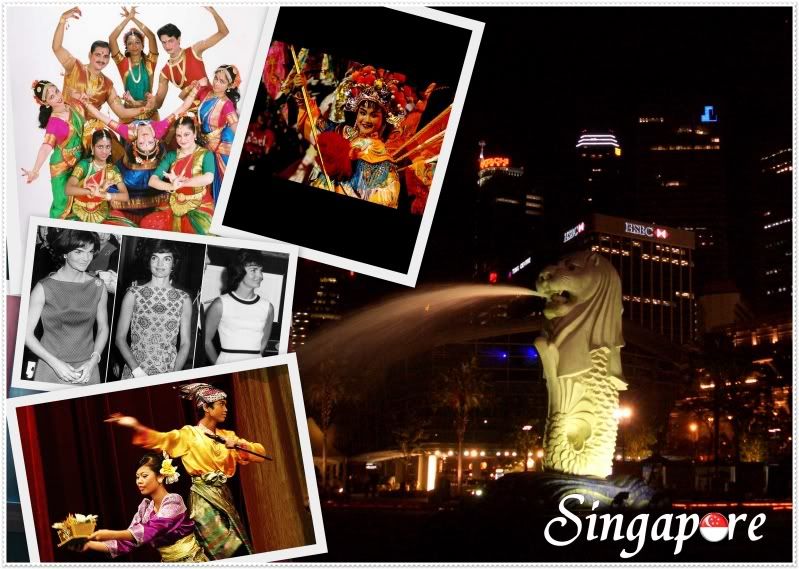
One of the special costumes which we would like to mention is the traditional Chinese Opera (Wayang) costumes. It has long and wide sleeves which exaggerates the actors’ hand movements during the showcase of the Opera. The oversized bodysuit is also explains the role and gender of the actors and actresses. The more intricate the details and colours are of the costumes denotes the higher status of the role.


The accessories are big and colourful so that it could be more attractive to the audiences. The headdresses also denotes the status and position of the role which the actor is performing.


Dress Up.


Tuesday, November 10, 2009


Bundles of Cloths


Chinese Brocade

It is made of silk and is one of the many types of brocade found throughout the world,including including South, South-East Asia,, Europe and the Muslim world. Using Gold or Silver metal thread enables the motif floating up to the surface and gleams when it catches light.

Lace

It is an open-work fabric in which techniques such as looping, weaving and many more helps to create decorative holes in fabric. There are many types of laces, such as Alencon, Chantilly and more.

Nylon
This is the first pure synthetic fibre to be developed, it is made up of raw materials like carbon,hydrogen and more. Soon later, the fibre became synonymous with nylon stocking....Therefore in this ever-changing world many things are progressing.

Silk Crepe
This is a heavy, textured, and high-end fabric used to make wedding and evening gowns. Crepe is a general term for fabrics tat have a crinkled surface.There are many types of Crepe and differentiated by the yarns used, such as cotton, wool and manufactured fibres.

Polyester
This is a generic name for fibres manufactured from acids and alcohols to obtain from petroleum. Developed in 1941, it soon replaced nylon as the most popular and cheap synthetic fibre.
This cloth can be used to make fashionable clothing that appeals to the masses and is easy to care for. However, it does not absorb the perspiration.

Satin
Duchesse satin is light weight, lustrous and wrinkle-resistant- the perfect material to use with lace. Its shiny surface and smooth finish is a result of its satin weave.The face of the fabric show all the warps and the wefts which explains the smooth surface. Duchesse satin is usually made form silk fibres although it also contain polyester, rayon or acetate.


Dress Up.


Sunday, November 8, 2009


Making of a Kebaya


Seen many Kebaya before???

The most striking feature of the kebaya is the embroidery brings out the uniqueness and shows the hard work of the tailor. While is takes about three years to learn on how to make a Kebaya, it could take a lifetime to master the skill of embroidery. This definitely shows that to sew such a beautiful Kebaya needed a lot of creativity and skills.

A Kebaya is mostly made of Rubia or Swiss voile, it is pre-shrunk before cutting the panels and sewing together. The tailor embroiders the motif using sewing machine which have the embroidery hoop that allows the needle to flow smoothly over the voile. Different colour shades of threads are used to bring out the three-dimensional effect of the embroidery.

Tebuk(sut-work) embroidery are also used in making the Kebaya. The unembroiderred cloth will be cut away and meshes will form by them to enhance the embroidery motifs.


When the embroidery is completed, the tailor will applies the Ketuk Lubang (a sewing stitch which produces gaps at perfect intervals) over the separate panels of the Kebaya, completing the garment.

Wearing a Kebaya not only brings out your figure, it also enable you to personalise your own Kebaya. You can wear kebaya for functions, party or anything as it bring out the poise and elegance of the wearer.


Dress Up.


Tuesday, November 3, 2009


A GO GO


Western Style dresses - early 1960

These dresses are made of mostly cotton with scooped or sweetheart necklines.
It has waspie waistline which brings out women figure. The dresses are usually starched and worn with cancan petticoat to give volume to the dresses.
Excursion dresses normally costs $8 whereas work dresses, $12


Swimsuit - 1950s-1960s
Made of nylon and lycra
Is created when swimming become a popular sport in Singapore
‘Nelbarden’ swimsuit first appear in France in 194
There is zipper at the top and bottom for a more fitting silhouette


Stocking Nylon – 1980s
Usually worn by Office ladies

Platform shoes – 1970s
Made form plastic, metal and rubber
Usually worn with mini western dresses


Wedding Gown – 1980s

Made of silk satin, lace, beads, sequins and pearl
Made by one of Singapore’s earliest wedding designers Sylvia Kho, this wedding gown is a fine example of her embroidery and tailoring skills. The boat-neck dress with long train is embroidered all over with sequins, pearl and rosettes made of swiss lace. These appliquéd flowers give dress a three-dimensional look. The three-quarter sleeves are ruche at the end and decorated with sequins and beads.
- Very shiny
- Very conservative

Common accessories around that era?
Wigs- mid 1960s

Women wore wigs so that they can have different hairstyle without cutting their hair


Dress Up.